The Cultural Heartland of Spanish Football: Rivalries and Mastery in La Liga
The Eternal Battle for Supremacy in the Iberian Peninsula
To talk about Spanish football is to talk about a passion that transcends sport, influencing the daily lives and cultural identity of millions. While many leagues around the globe rely on sheer physical power or high-speed transitions, the Spanish game has long been celebrated for its technical grace, tactical intelligence, and the narrative weight of its biggest clubs. At the center of this world sits La Liga, a competition that has consistently produced the world’s most successful teams and individual talents over the last several decades.
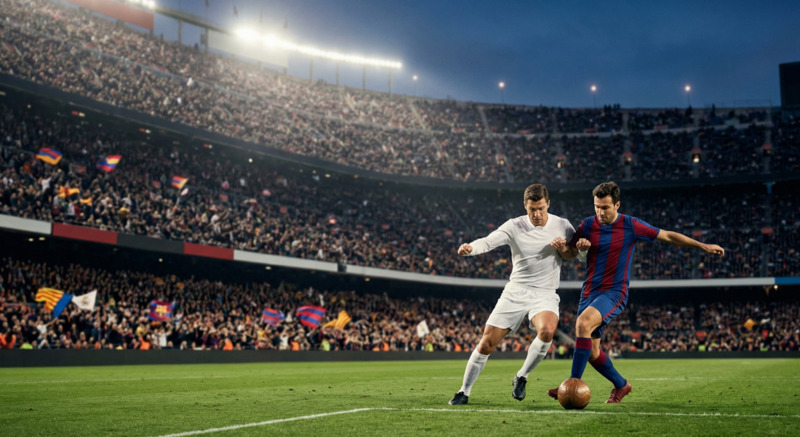
The domestic competition in Spain is defined by a unique blend of regional pride and global commercial reach. While the league features twenty teams, the gravity of the competition inevitably pulls toward the two giants: Real Madrid and FC Barcelona. This rivalry, known as El Clásico, is not merely a game of football; it is a historical and political event that captures the attention of hundreds of millions of viewers across every continent. The contrast in philosophies between these two institutions provides the primary pulse of the Spanish season.
Real Madrid: The Majesty of Success
Real Madrid occupies a space in the sporting world that few other organizations can claim. Their identity is built upon an unrelenting pursuit of excellence and a belief that they are the rightful heirs to every trophy available. Unlike many clubs that adhere to a specific tactical ideology, Real Madrid is often defined by its pragmatism and its ability to win under immense pressure.
The club’s strategy has frequently revolved around the "Galácticos" policy—signing the biggest names in the world—but in current years, this has transitioned into a more balanced approach. They now focus on securing the best young talent globally before they reach their peak. The current squad, featuring players who combine extreme athleticism with technical proficiency, represents a new era for the Santiago Bernabéu. The stadium itself, recently renovated to become a year-round entertainment hub, serves as a temple for this philosophy of constant growth and dominance.
What makes Real Madrid particularly formidable is their psychological resilience. In European competitions, they possess an almost mystical ability to overcome deficits. This "never-say-die" attitude is woven into the fabric of the club, making them the benchmark for success in Spanish football.
FC Barcelona: More Than a Club
On the other side of the divide stands FC Barcelona, an institution that prides itself on a very different set of values. Their motto, "Més que un club" (More than a club), reflects their role as a symbol of Catalan identity. Historically, Barcelona’s success has been tethered to a specific style of play rooted in possession, short passing, and a heavy reliance on their youth academy, La Masia.
The legacy of Johan Cruyff remains the guiding light for the club. The idea that winning is not enough—that one must win with beauty and a specific methodology—is what separates Barcelona from its peers. While the club has faced significant financial hurdles in the current era, the reliance on academy products like Lamine Yamal and Gavi has revitalized the connection between the team and its supporters.
Barcelona’s tactical approach requires a high level of technical skill and an intuitive sense of positioning. When the system works, it creates a rhythmic, hypnotic version of football that can stifle opponents by denying them the ball for long stretches. This commitment to a specific identity ensures that even during periods of transition, the club remains one of the most respected and watched entities in the sport.
The Tactical Identity of the Spanish Game
Beyond the big two, La Liga is known for its tactical diversity and the high technical floor of its players. Even teams in the bottom half of the table often possess midfielders who can retain possession under pressure and defenders who are comfortable playing the ball out from the back. This is a result of the coaching education in Spain, which prioritizes "el rondo" and positional play from a very young age.
In the current season, we see a variety of systems. While the traditional 4-3-3 remains popular, many coaches have adopted more fluid structures. Teams like Atlético Madrid, under the long-term guidance of Diego Simeone, have shown that there is also room for defensive discipline and "cholismo"—a gritty, counter-attacking style that challenges the dominance of the more possession-heavy sides. This variety ensures that every weekend provides a different tactical puzzle for the players and the fans.
Entertainment Beyond the 90 Minutes
The experience of being a football fan in Spain is not limited to the time spent inside the stadium. It is a lifestyle that involves pre-match rituals at local bars, hours of post-match debate on television and radio, and a constant engagement with the digital world. For many supporters, the excitement of the game is a continuous experience that doesn't end with the final whistle.
During the days between matches, or during the long summer breaks, fans often look for other ways to keep the competitive spirit alive. Digital engagement has become a primary outlet for this. Whether it is through fantasy football leagues, sports simulators, or searching for the best online slots to pass the time during a mid-week lull, the desire for interactive entertainment is a hallmark of the contemporary fan. These activities provide a different kind of thrill, mirroring the unpredictability and high stakes of a crucial league fixture. This integration of technology and sport has transformed how the audience consumes content, making the football ecosystem more immersive than ever before.
The Rising Stars and the Next Generation
The health of Spanish football can often be measured by the talent emerging from its academies. While the league has lost some of its veteran superstars to other regions, it has replaced them with a crop of teenagers who play with a maturity far beyond their years. The development of talent in Spain is a structured process that emphasizes decision-making and spatial awareness.
Young players in La Liga are often introduced to first-team football much earlier than in other major leagues. This baptism by fire allows them to adapt to the speed and physicality of professional football while their technical skills are still being refined. The sight of an 18-year-old commanding the midfield in a high-pressure environment is common in Spain, and it is this constant pipeline of talent that keeps the league competitive on the global stage.
Economic Sustainability and the Global Brand
The financial structure of La Liga has undergone significant changes to ensure long-term stability. The league has implemented strict economic controls to prevent clubs from spending beyond their means, a move that has led to some short-term friction but aims to create a healthier environment in the future.
By centralizing the sale of television rights and focusing on international markets, La Liga has managed to remain a top-tier destination for sponsors and viewers. The league’s focus on the North American and Asian markets has helped bridge the gap with other wealthy competitions, ensuring that the spectacle of Spanish football remains accessible to a global audience. The investment in stadium infrastructure and digital platforms has also played a role in maintaining the league's status as a premium product.
The Future of the Spanish Game
As we look toward the coming years, the trajectory of Spanish football appears to be one of cautious optimism. The heavyweights are reinvesting in their foundations, and the "middle class" of the league is becoming more tactically sophisticated. The rivalry between Real Madrid and Barcelona continues to evolve, with new faces taking up the mantle of leadership.
The blend of historical tradition and a willingness to adapt to the digital age ensures that La Liga will remain at the forefront of the footballing world. Whether it is through the drama of a last-minute goal in Seville or the technical masterclass of a midfield display in Madrid, the Spanish game offers a depth of experience that is hard to replicate. The passion of the fans, the brilliance of the players, and the strategic minds of the coaches all work in harmony to maintain Spain’s position as a true cathedral of world football.